Tuesday, February 14, 2017

Carnival Colors

Spectacular floats adorn the streets with people dancing without inhibition in their brilliantly coloured costumes while rainbow coloured masks and feathers adorn the faces of passers-by. Scores of entertainers from diverse lands and color are aplenty and the atmosphere is that of merry making twice over. Eager tourists can’t believe their luck as they take to their hand held smart phone cameras trying to capture the perfect ‘SELFIE’ and update their joy on social media saying – ‘It’s that time of the year again!’ We’re not describing the popular festival Mardi Gras in New Orleans. We’re talking about our own version of it, here in our very own backyard – The Goa Carnival.

Easily the biggest festival and unique and exclusive to Goa since the 18th Century, The Goa Carnival is celebrated before the commencement of the 40 days of Lent; which is a period of fasting, abstinence and spirituality. It was introduced by the Portuguese, who ruled over the state for more than 500 years.

Although the three day festival is predominately celebrated by the local Christians, it has evolved to include some traditional Hindu flavour over the past decade as well as western music and dance form. Though it originally started as a celebration by the local population, it has crossed all geographical and cultural barriers with thousands of people thronging from all over the country and the world take active part in it.

Taking place between the 25th and 28th of February in 2017, the carnival will kick off with an order to start partying, from the legendary King Momo, or the ‘King of Chaos’, a character derived from the Greek God, Momus – The God of Satire. Following him, in procession, are flocks of dancers, bands, folk singers adorning costumes of fortune tellers, hawkers, older men and women in brightly coloured clothing and many more such delightful imagery and entertainment to watch.

The three days that follow is a time of unbridled festivities among the masses. Day long parades, accompanied with live bands, dance troupes, party goers wearing masks and costumes, sports competitions and colourful floats. It’s also a great time to treat your taste buds and indulge in the sinful local delicacies and wash the food down with a glass or four of the local Goan spirit, Feni. If you’re a late riser, don’t worry, you won’t miss a moment of the celebrations as they go on late into the night.

Back in the day, the procession would enact battle scenes, with boys and men armed with fake guns, loaded with coloured powder. There was no shortage of firecrackers that were lit in harmony with the beat of the drums. Local boys eagerly waited for the Carnival, as it became an opportune setting to profess their love for the girl of their dreams.

The festivities culminate with the ‘Red and Black Ball’ that has women dressed in red tops and black skirts while their male counterparts adorn red shirts and black trousers – this is held at the Clube National in Panjim and is a gala event attended by multitudes of people.

So if you are planning a trip to Goa plan to be there around The Goa Carnival.


Image credits: planetgoa and jattdisite and globalvisiontours

Saturday, February 11, 2017

Beautiful Strokes

It is common in the US and Canada for artists to hone their craft by going to different locales, which inspire them in different ways. They also find the exercise more interesting and inspiring, and hence when they find locations in other countries, the trip becomes a holiday too. Suzanne Northcott, an artist from Canada, recently conducted one such art workshop for a motley group of art learners at the Aashyana Lakhanpal, Goa.

The group largely spent most of their time painting and doing yoga at the beautifully set Yoga Pavillion but when their schedule permitted and their curiosity got the better of them, they toured the culturally rich and social hobnobbing spots of the city where people from across the world took on the gay and languorous vibe of the city.

The experiences they enjoyed were many; they particularly enjoyed the performance of a RUSSIAN SINGER, who crooned beautiful renditions of Mozart, Bizet etc. on the very first evening of their stay at Aashyana Lakhanpal. The WEDNESDAY AFTERNOON BAZAAR at Anjuna Beach, which originally started as a flea market during the hippie era and has continued to this date on a larger scale. Shopping was a key attraction here. This was followed by a trip to the SATURDAY NIGHT MARKET at Arpora, which is similar to the Wednesday market but differs by having a large international food court with live music and dancing, making the night a lot of fun.

Located in the industrial area called Pilerne is the new MUSEUM OF GOA created by a Goan artist – this visit gave them a peek into the colorful history of Goa. One morning they took a BOAT TRIP on the Mondavi River where they caught glimpses of the city and its vegetation and concluded the day with a spectacular sunset. No trip to Goa is complete without a viewing of OLD GOA. So one morning they took a day trip to the SPICE PLANTATION and on the way back they witnessed the architectural beauty of old Goa and the BASILICA OF BOM JESUS where to date lie the mortal remains of Saint Francis Xavier.


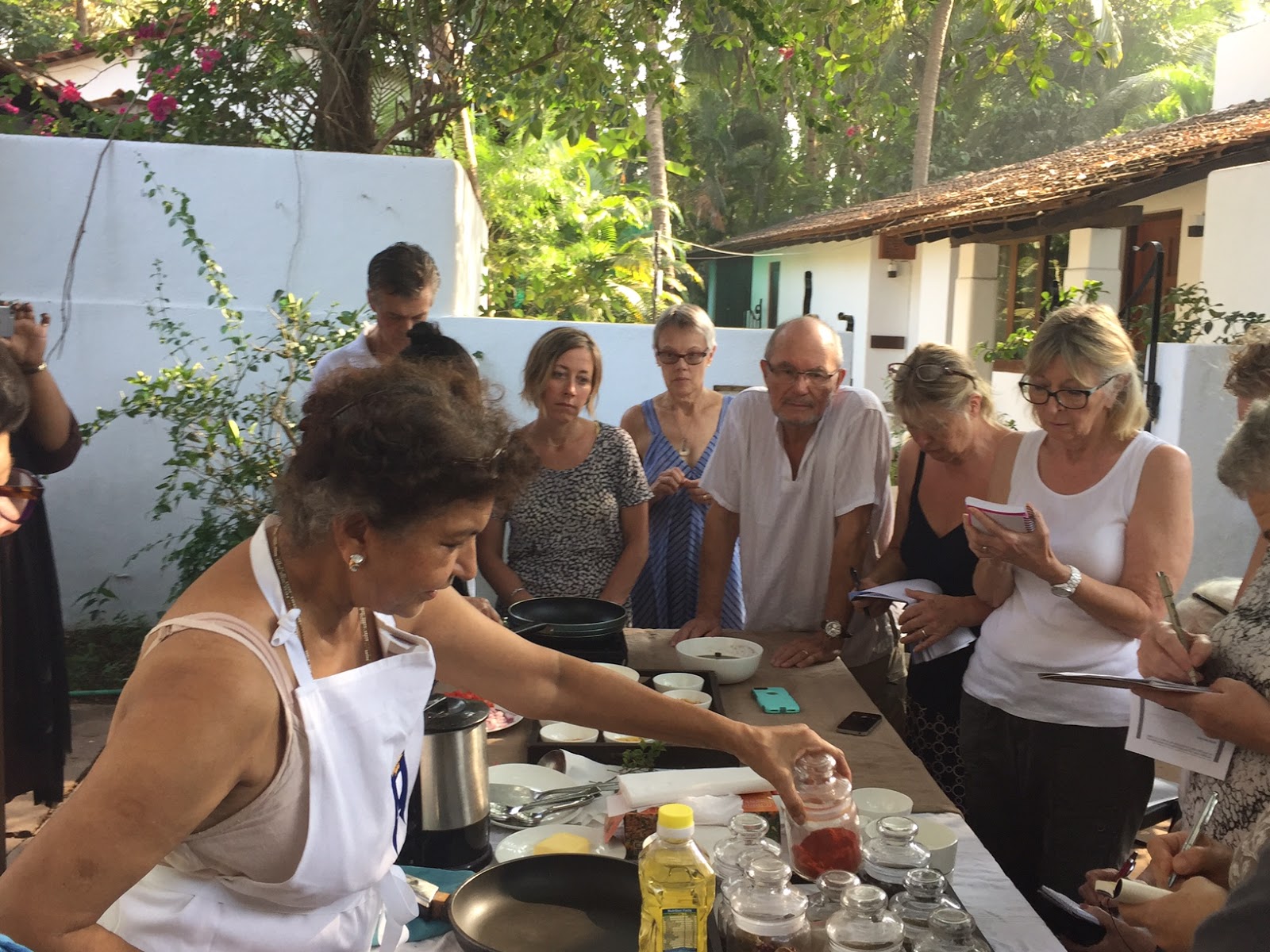
A COOKING WORKSHOP was organised for them with Meera Chinai, who in a couple of hours gave them the basics of Indian cuisine, more specifically the Indian DAL. She shared with them the importance of TADKA (known as tempering in English) and also demonstrated how tadka was done in India. Since they were so intrigued Meera also taught them how to cook the simple and popular south Indian snack UPMA, the ingredients of which are easily found in all western countries and the method is quite simple. They found it easy to use and thoroughly relished the snack after tasting it.

LET’S MAKE SOME UPMA!!

INGREDIENTS:
1 cup of semolina
1 tbsp cooking oil
½ tsp channa dal
½ tsp udad dal
½ tsp of mustard seeds
1 onion finely chopped
2 green chillies
4-5 curry leaves
1 glass of water
5-6 stalks of coriander/cilantro
1 lime cut into long wedges

THE BURPY TO-DO:
-     Roast the semolina in a pan on a medium flame until crunchy – this should take about 10 minutes. Once done take it off the fire into a plate to cool.
-     Add the oil to the same pan and once heated add the mustard seed and when they sputter add the udad and channa dals and stir them until they are slightly brown.
-     Toss in the onions, green chillies and curry leaves and stir till the onions soften.
-     Add the roasted semolina to the pan and stir well for 5 minutes. Add salt to taste.
-     Add a glass full of water to the pan (watch out for it sputtering) and stir quickly to avoid formation of lumps.
-     Cover the mixture for about 15 minutes on a low flame – the water will dry up and once the consistency becomes paste-like your Upma is ready
-     Take it off the fire and serve in a bowl – garnish it with fresh coriander/cilantro and wedges of lime

Suzanne and her students thoroughly enjoyed their visit to Aashyana Lakhanpal and have plans to come back again next year.

Wednesday, January 25, 2017

Nesting of a different kind


North Goa, has become synonymous with crowded beaches, hippie markets and a crazy nightlife, and it is usually difficult to find a quiet, homely and comforting space around it. And yet, in the milieu is an oasis like no other that intrigues the curiosity of the keen traveler.

In the early 80’s, Ajai Lakhanpal bought a home for himself in the inimitable North Goa, and over the years, has meticulously added science and magic to it, to create a paradise so inspiring and beautiful that he was compelled to share it with the world. Over a decade ago the treasured property, opened its doors to travellers that were looking for a unique escape from the mundane, and ever since, guests have poured in from all over the globe, to experience the harmony within themselves and that of AASHYANA LAKHANPAL.

The property inherited its name from Ajai’s family homes named ‘Aashyana’ in Jallandhar and Mumbai – the meaning of which in Persian is bird’s nest. Just as a bird builds its nest with precision and detail to ensure the comfort and care of its hatchlings, Aashyana Lakhanpal perched on the pristine Candolim beach, is built with utmost care and thought under the supervision of Ajai himself, keeping in mind the comfort of his guests.

It is perhaps the only shaded coconut grove in the world from which you can step directly on to the beach. You can lose yourself they say, in the wonder of its unmanicured ambience, where nature is allowed to be its amazing self while the simplicity and uncluttered décor in the villas bring a touch of finesse to one’s experience. Life imitates art, and Ajai himself curates art from pieces he has found and brought back from his travels around the world. These individual and unique pieces can be found around the property and in each of the rooms, while Buddha statues and 7 hand carved granite altars at the entrance axis of the house, hold place of pride for each day of the week.

While guests are being pampered and taken care of, Aashyana Lakhanpal also takes care of the environment by harvesting rainwater and feeding it back with the help of four aquifers on the property. This has benefited the property and perhaps neighbouring homes too. The garden also employs a permaculture framework that regenerates soil naturally.

“Aashyana Lakhanpal’ beauty has attracted distinguished artist camps with the likes of Bhupen Thakkar, Nalini Malani, Nilima Shaikh, Rekha Rodwitya, Navjot and the late Altaf and many others gracing its spaces to create wondrous art pieces, while besotted loved ones have read their vows under the bows of its fauna and corporate honchos have inspired their teams to have strategy discussions like never before. I believe we have truly created a haven, for the world to experience,” said Ajai as he looked on at the expansive natural habitat surrounding him.

The renowned art curator and philanthropist, OP Jain fittingly described the property after his visit, “Aashyana Lakhanpal has the comforts of a palace and the silence of a monastery; it has the silence of Humanyoon’s tomb and the grandeur of the Taj Mahal“

Indeed the perfect balance of a natural habitat coupled with the attention to detail and warm hospitality makes Aashyana Lakhanpal the destination of choice for many of its visitors, bringing them back for more, to rekindle old memories and create new ones too. 

Monday, January 25, 2016

Sports Heroes Anthem

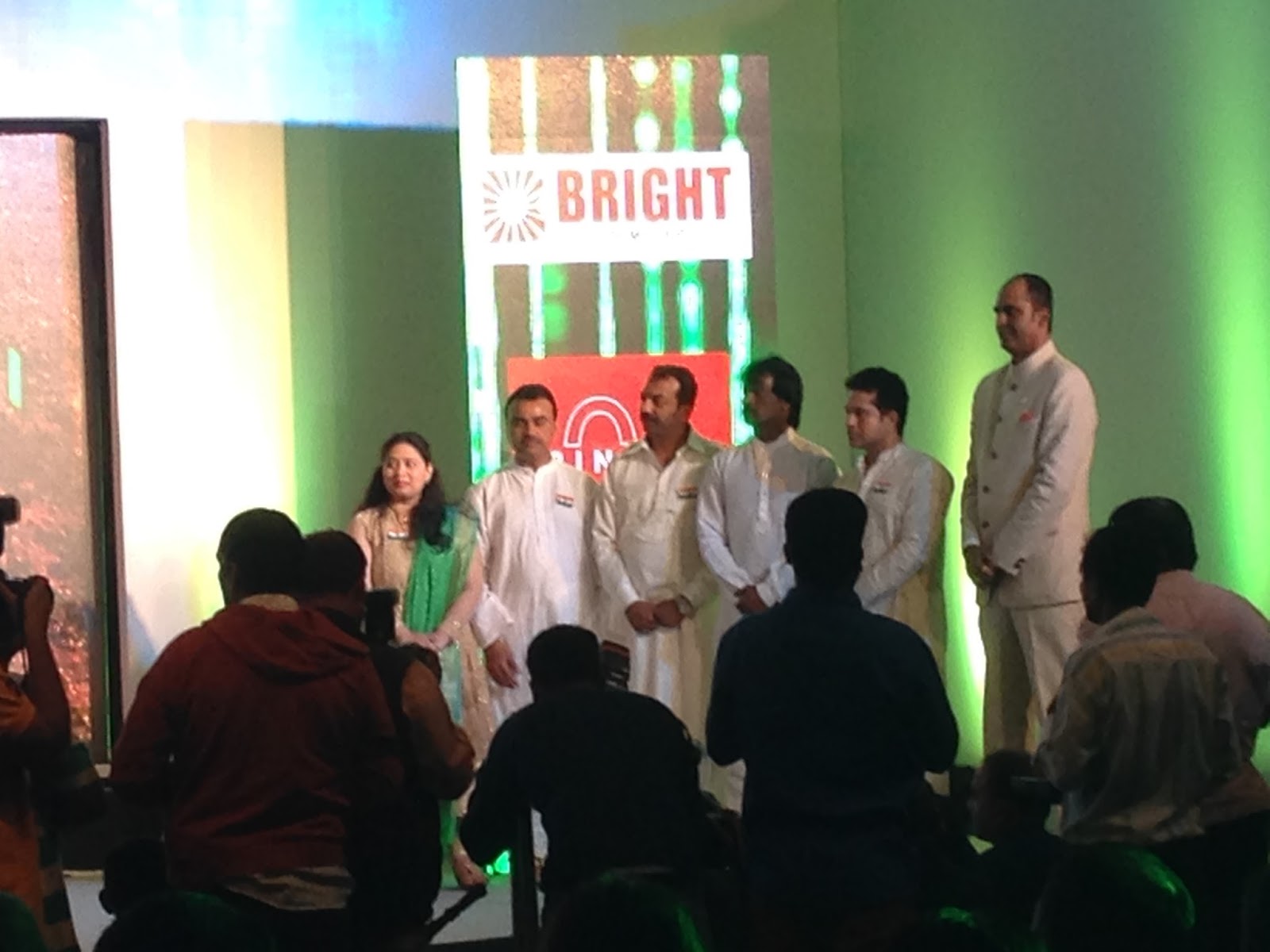
Earlier this week I received a call from my friend and ex-colleague Rasika Kulkarni. She sounded excited, as did Nilesh Kulkarni - they are both the Directors of the International Institute of Sports Management, Mumbai, India. Without exchanging the usual pleasantries they asked me to block my diary for the 24th of January 2016 for a very special milestone in their lives ... they were launching the #sportsheroes national anthem enacted and supported by 8 of India's sports heroes @sachin_rt @dhanraj_pillay @ibaichungbhutia @Maheshbhupathi @WrestlerSushil @MirzaSania @gaGunNarang and the great Sunil Gavaskar @excricketr ... the anthem has been conceptualised by Nilesh and Rasika and is written and directed by Abhijit Phanse, music direction by Ram Sampath, Photography by Sudeep Chatterjee ... tremendous team effort with an outcome of a 3.10min video that strung the right chords giving the traditionally dressed audience goose bumps and moist eyes.

Dhanraj and Sachin were the only two of the eight sports heroes that were present at the event held at the #TajLandsEnd. Both of them spoke with humility and emotion about their sport and the flag and the joy they have felt each time the #indianflag was unfurled in a foreign land because of their win.

The beautiful sentiment of 'Apne bachhon ke pairon ko apne desh ki mitti lagne do' was given by Sachin, Dhanraj and Nilesh. It was portrayed with beautiful imagery of children playing gully cricket, marbles, sprinting, catapult and many such. The key message of the anthem was that all the eight sports heroes shown in this version of the anthem, are people from very humble beginnings and today they are on the global arena playing on behalf of #India making us proud by winning and unfurling the #indianflag across the world - and this is possible by each of our children too.

As a child I remember playing all kinds of games in the open spaces with my friends. Games like kity-kity, lagori, robs&cops, dabba-i-spy (it was pronounced as dabba-ice-spice), goooooooldspot, hopscotch, fire-in-the-mountain, climbing trees and eating guavas and shehtoot and badams, swimming, cycling, racing, badminton, gymnastics, throwball, basketball, high jump, langdi, phugddi, kho-kho, hututu (kabaddi), four corners. We would leave home at about 4pm and not return until 8pm in time for a wash and dinner with the family. Getting dirty in the mud was a given. Falling and scraping our hands and knees was common place as was getting back to the madness after a tear or two -- that thrill and joy I felt in those growing years is unmatched.

Playing a sport builds our strength, teaching us about team spirit, about the victories and losses that one faces in life and how to toughen up and accept defeat and then get back and try again the next day. Sport doesn't care for your color, caste, wealth, religion ... all it cares for is your talent. And if you can convert that talent into a passion and maintain your focus and instill a culture of self discipline and hard work it is most certain that the world will salute you in return ... and you too will have the opportunity to watch the #indianflag unfurl as you stand atop the victory stand with a lump in your throat, a tear in your eye and a billion+ cheers to back you up! Go India go ... #winforindia


Saturday, January 2, 2016

#2016 - #Newbeginnings

Is it that time of the year again?
For reflections of the months gone by,
Where masking the tears, were the smiles aplenty.
A cuss under the breath and the avalanche of intolerance spilled, and
In the dark of the night rising cries of pity. No. Anger, into the pillow.
Resolve for an affirmation of change,
Beginning from me - the fingers pointing at me no longer.
When thought out resolutions are copious, assuring life anew,
A time for hope they say; that numerology may help!

Plans to meet who, when and where - the Marina or perhaps the Corniche?
For pretty dresses to impress - He likes the color blue, he said.
But, 'Sorry we don't have an open slot Ma'am'
The polish has a smudge and there is no repair,
The blue one isn't showing my cleavage enough,
The beauty spot needs to show - the red one is short too,
My eyes trace the slit and the red reflection smiles.

The sea of yellow and red is growing bigger.
Oh, I wish they would hurry!
But will I be able to focus on me
The regime of Yoga. No, he said Zumba!
And no whites; for how long would that be?
And the phone is ringing and I do not hear.
I am late, as always he says.
Be good - And who is saying that?
I should have worn blue!
And us...
Is that a light?

==========


Shades of the new year at Carter Road Bandra last evening with massive crowds of people took to the roads with friends, kids, elders and family were an interesting first time experience for me. People of all kinds Indian and foreign; tiny and huge; modern and conservative; young and old hugged, smiled, laughed, Selfied, lit crackers, wore caps and red illuminated horns and let go of balloons and floating lanterns into the dark sky singing Happy New Year ... it was a time for cheer.


At the traffic signal was an efficient cop on duty directing traffic. I extended my hand out at him saying 'Happy New Year Sir'. He smiled and gave out and then on second thoughts pulled back his hand. smiled and said 'Happy New Year Maam' and went on with his job at hand ;)

Wednesday, December 30, 2015

The Mantra of Empowering Young

Recently Rekha and Inderjit Sharma, 75+ year old senior citizens of Mumbai, India had a manifestation of their continued efforts towards empowering young girls - daughters of a rickshaw driver, or a vegetable seller, or perhaps a cobbler or cleaner; where their education is the least priority and restriction is norm.

It is to such girls that they provide support by encouraging them to continue their studies, teaching them to communicate in the world language 'English' and alongside facilitating them with the skill of sewing garments for children and women using sewing machines and fabric donated by friends and family. 

The year long effort of sewing and coaching concluded by facilitating them with a platform to experience public interaction. This was made possible on two occasions - The first being at the annual exhibition of the Dilkhush Center at Juhu where they set up stalls of fun games like 'blow in the cork' and 'how steady is your hand' - both the games were made by the children and taught them to apply their learning of physics. Needless to say that the experience of trying to blow the cork in and keeping the hand steady while carefully taking the wired loop across the twisted band to avoid touching it and sparking the beep brought a load of delight for the challengers - collecting the coupons and donating the same to the school taught the children how to give without expecting anything in return.

The second interaction was at the School of Life at Andheri Versova Link Road where the sewed garments were first displayed on hangers with price tags, the team was taught how to respond to queries about the garments, complete the transaction, packing and finally taking feedback. 

The simple objective of this exercise was to empower the young girls with the confidence to interact in society, acquire a skill that they can use to earn a livelihood and learn the intricacies of what it takes to create a home grown venture.

The result was heartening as most of the garments flew off the hangers thanks to the enthusiastic visitors who encouraged the girls for their efforts and hard work. 

The smiles on their young and hopeful faces when the exhibition came to a close were priceless; while for Rekha and Inderjit their minds were busy making plans of how to fulfill new dreams in the new year.

Social Entrepreneur - Can you be one?

Entrepreneurship normally is a form of work that people with leadership qualities easily take to, and if the leader is inspiring and has an incredible idea or innovation that makes life better, he or she naturally attract followers to believe in their passion and co-create wealth for stakeholders. Now imagine a leader that has a passion to create wealth with a social mission as its epicenter – a mission that is viable while effecting change, that is inclusive of people living at the fringes of society and that can reach out to people across the globe; a business leader of such an enterprise is called a social entrepreneur.

They both create opportunities – but there is a difference. The regular entrepreneur thinks only of his enterprise and donates in retrospect while the social entrepreneur thinks of how his enterprise can change the lives of people by empowering them to be a part of the change.

Years ago, I had the privilege of working on OASIS (Old Age Social Income Security) a project initiated by a small company called Invest India Economic Foundation, under the aegis of the Ministry of Social Justice – we endeavored to develop a pensions framework for retired people of India by encouraging them to systematically save money into a professionally managed pension scheme during their work lives so that they can continue to live with dignity in their golden years – our team led by Gautam Bhardwaj worked tirelessly and passionately initiating research papers, conducting conferences, meeting stock market experts, insurance and mutual fund heads, government officials and bureaucrats for several years; more often than not having cost over-runs - the result of that project is the recently launched New Pension Scheme.

Around the same time I got acquainted with the phenomenal work of Mohammad Yunus, the economist from Bangladesh, who created the unique ideology of micro-finance and formed the Grameen Bank, which helped the poorest of the poor to break out of poverty by providing loans to entrepreneurs who could not qualify for regular bank credit – loans were given in solidarity groups that ensured repayment.

In the United States; Leilah Jenah started the Sama Source, which works effectively to uplift communities across the globe - they simply understood the billions-of-dollars-worth business process outsourcing model and turned it into an enterprise that used technology to get thousands of poor people to be part of projects and gave money straight into their hands. Goodwill Industries popularly associated with charity, employs marginalized people, recycles donated clothing and helps corporations with doing their events and managing their relocation - they earn store revenues amounting to $3 billion.

Closer home the SEWA Bank formed by Elaben Bhatt works successfully with poor women with the mantra that they are 'bankable' as they are economically active; and not to be forgotten is Dr. Verghese Kurien’s white revolution gave livelihood to millions making India one of the world’s largest producers of milk and made Amul a household name.

All the examples mentioned above are successful social entrepreneurship stories led by great minds that kept their mission of effecting change in societies as their epicenter.


Among the many global problems, poverty is one that leads to personal misery and frustration. Poverty is the result of lack of opportunity to make a livelihood for loved ones. 'An idle mind is a devils workshop' is an old adage that has never been more meaningful in today's times than before, as all of us belong to the global village with connectivity and awareness of what we can have and can't because of or the lack of, our financial capacities. This stark reality of the poor is more in our face today and yes we feel guilt but don't take time out to empathise because we are too busy with our personal endeavours to do better, thereby widening the divide between the haves and the have not's. This divide aids angst against the better endowed and often results in crime and unrest. Social entrepreneurship today seeks to provide occupation to those educated but idle minds, thus reducing the divide and being an essential ingredient to pave the way for global peace.

What further aids social entrepreneurs’ today is the new but popular ideology called impact sourcing, which is sourcing based on social impact and quality. Procurement Managers from corporations have the option to choose the partners they wish to work with through the year for their business related needs and are also are conscious of the companies corporate social responsibility #CSR targets. There is a growing trend to consciously work with organisations that have an explicit social mission. By choosing to work with such enterprises they ensure that their allocated budget is actually being used to address issues like poverty alleviation. This way of reaching out to people and aiding their lives is far more effective and real than donating money to an NGO at the end of the year or hoping that a fraction of the tax one pays is collected by the government and appropriately disbursed to improve the lives of the needy.

#socialentrepreneurship is one of the important keys that can make each one of us have a meaningful role to play and feel the responsibility of making our world a truly global village and us a truly global family.

Raj Kumar Singh - Being Good, Rickshaw Driver, Mumbai

While getting off a rickshaw saddled with a few heavy bags last afternoon, I heard a sound of something dropping and so turned to look ba...